Turning Over a New Leaf: A Fall Look at Footwear,
Comfort & How Far Shoes Have Come
There’s something about fall that makes us ready for a change.
Even here in Florida, where autumn doesn’t always bring dramatically changing leaves and freezing temperatures, we still notice the shift. Mornings get a little cooler, evenings become more comfortable, and suddenly spending time outside sounds a whole lot more appealing.
We change our wardrobes, pull out clothes we haven’t worn in months, and start reaching for more closed-toe shoes. Fall is a season of transition—and it turns out that footwear has gone through quite a few transitions of its own.
So, while you’re thinking about “turning over a new leaf” this season, we thought it would be fun to take a step back in time and look at just how far the shoes on our feet have come.
Shoes Weren’t Always Made With Comfort in Mind
Today, we walk into a shoe store expecting choices. We think about cushioning, arch support, width, stability, materials, traction, and how a shoe feels when we walk. For much of history, footwear was considerably simpler.
Shoes primarily served a practical purpose: putting a layer between the foot and the ground. Depending on the time and place, footwear was made from materials such as leather, woven fibers, wood, and eventually rubber. Even the way shoes were manufactured was very different.
Before modern mass production, shoemaking required an enormous amount of skilled handwork. One of the most important tools was—and still is—the shoe last, a foot-shaped form used as a mold when constructing a shoe. The Smithsonian's National Museum of American History notes that before mass manufacturing, different portions of the shoemaking process could take place in homes and small workshops before the finished shoes made their way back to merchants.
Imagine shopping for shoes today if nearly every pair had to go through that kind of process!
That began to change dramatically during the 1800s. One particularly important figure was Jan Ernst Matzeliger, an inventor who developed a machine capable of automating the difficult process of “lasting”—joining the upper portion of a shoe to its sole. Matzeliger received a patent for his lasting machine in 1883. According to the Smithsonian's National Postal Museum, an expert worker at the time might produce about 50 pairs of shoes in the same period that Matzeliger's machine could produce as many as 700. That innovation helped transform shoe manufacturing and played a role in making footwear much more widely available.
Another major change came from a material we barely think twice about today: rubber. Natural rubber had a problem. It didn't behave particularly well when temperatures changed. Heat could make it sticky and unstable, while cold temperatures created other challenges.
In the 1800s, Charles Goodyear developed a process that would eventually become known as vulcanization. His 1844 patent described a method of treating rubber that helped create a much more useful material.
That discovery had enormous implications for footwear.
The Smithsonian notes that vulcanized rubber eventually helped make functional rubber-soled athletic shoes possible. By the 1860s, rubber-soled shoes were being made for activities such as croquet, and the growing popularity of sports helped create demand for shoes that could provide flexibility and function in ways traditional leather footwear could not. In other words, the comfortable rubber sole under many of the shoes we wear today has a history stretching back well over a century.
And people were experimenting with rubber long before that. Smithsonian research notes that ancient Mesoamerican civilizations developed sophisticated ways of processing natural rubber and even used durable rubber for sandal soles thousands of years ago. Turns out comfortable footing isn't exactly a new concern!
Perhaps one of the biggest changes in footwear isn't a particular invention at all. It's the way we now think about what a shoe is supposed to do. We don't simply want something between our feet and the sidewalk. We expect our shoes to work with our feet. Modern footwear can incorporate cushioning, different levels of arch support, flexible or structured materials, shock absorption, specialized insoles, varying widths, and outsoles designed for different activities and surfaces.
And that's important because no two pairs of feet are exactly alike. Someone with a high arch may have very different footwear needs from someone with a low arch or flat feet. A person who spends an entire workday standing may need something different from someone looking for a casual weekend shoe. People dealing with heel discomfort, plantar fasciitis, or other foot concerns may need to pay even closer attention to what they're wearing.
That's one reason we put so much emphasis on proper fit at Boger's Shoes.
A shoe can look great on the shelf, but the real question is: How does it work for your feet?
That brings us back to fall.
Seasonal changes give us a natural opportunity to take inventory of our shoes. As you begin wearing closed-toe styles more frequently, pay attention to how those shoes actually feel. That favorite pair from last year may have more wear than you remember. Look at the soles. Is the tread noticeably worn? Think about the cushioning. Does the shoe still feel supportive, or does it feel flatter than it used to? Check the fit. Are your toes crowded? Does your heel slide? Are you experiencing pressure somewhere you didn't notice before? And most importantly, pay attention to how your feet feel after you've been wearing them for several hours. Shoes don't have to be completely falling apart before they're no longer serving your feet well.
Fall can also mean more time outdoors. Cooler Florida temperatures make walking, community events, weekend markets, outdoor gatherings, and simply spending an afternoon outside much more enjoyable. That can also mean more steps—and more reason to make sure the shoes carrying you through them are up to the job.
Turn Over a New Leaf for Your Feet
It's pretty amazing to think about how much history is underneath our feet every time we lace up a pair of sneakers. We went from individually crafted shoes and labor-intensive manufacturing to machines capable of producing footwear on a large scale. We learned how to transform rubber into a material durable enough to change athletic footwear forever. Over time, shoe design evolved from simply protecting our feet to considering how footwear can improve comfort, movement, and support.
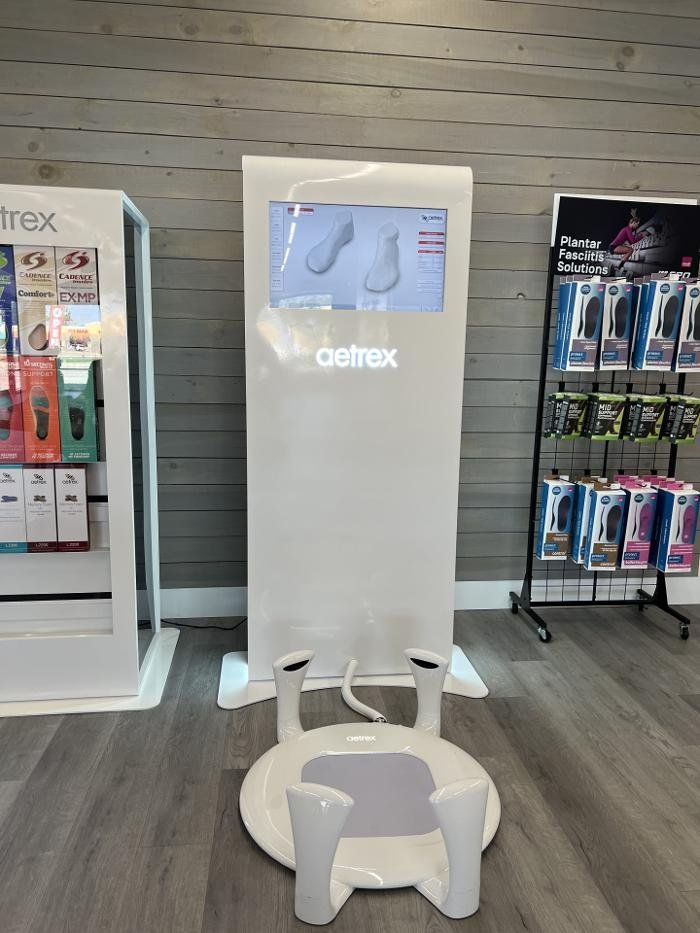
At Boger's Shoes, we're proud to continue a very old tradition in a much more modern way: helping people find shoes that truly fit their feet. With knowledgeable fitting assistance and technology like our Aetrex foot scanner, we can take a closer look at your feet and help guide you toward footwear and support options suited to your individual needs.
So, as the season changes, maybe it's time to take a look at what's carrying you through it.
Pull out those fall shoes. Check the soles. Take a walk around the house. Pay attention to how your feet feel.
And if something doesn't feel quite right, perhaps it's time to turn over a new leaf—and step into something better. After all, footwear has spent centuries evolving.
Your feet deserve to enjoy the progress.
Stop by Boger's Shoes in Orange Park and let us help you fall into comfort this season.